
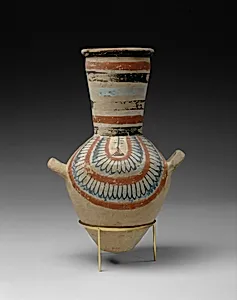
Jar from the tomb of Sennedjem
Unknown Artist
ca. 1279–1213 B.C.
Medium
Painted red pottery
Dimensions
H. 30.5 cm (12 in); w. 16 cm (6 5/16 in)
Classification
Jar, wine
Period
New Kingdom, Ramesside
Department
Egyptian Art
Museum
Metropolitan Museum of Art, New York, NY
Credit
Funds from various donors, 1886
Accession Number
86.1.10
Rights
Public Domain
Art Historical Context
This elegant jar hails from the tomb of Sennedjem, a high-ranking artisan and servant in the Place of Truth during Egypt's New Kingdom, around 1279–1213 B.C. Discovered in the Theban necropolis at Deir elina, Sennedjem's tomb (TT1) is renowned for its vivid wall paintings and intact funerary goods, offering a rare glimpse into Ramesside life under Dynasty 19. Crafted during the reign of pharaohs like Ramesses II such vessels were essential for the afterlife, symbolizing abundance and provision for the deceased's eternal journey. Made of painted red pottery—a common medium using Nile silt clay fired to a warm red hue—this jar stands 30.5 cm tall and 16 cm wide, ideal for storing oils, grains, or perfumes as offerings. The painted decoration, though not detailed here, typically featured symbolic motifs like lotuses or geometric patterns, showcasing the skilled handiwork of Deir el-Medina's craftsmen. These everyday yet sacred objects highlight the Egyptians' belief in *ka* sustenance, blending utility with spiritual purpose. Acquired by the Metropolitan Museum of Art in 1886 through donor funds, this jar exemplifies the exquisite simplicity of New Kingdom ceramics, bridging the mortal world and the divine. Visitors, imagine Sennedjem's spirit drawing comfort from its presence millennia later!