
Jar (Guan)
Unknown Artist
ca. 2300–2000 BCE
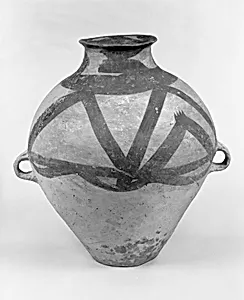
Medium
Earthenware with painted decoration
Dimensions
H. 13 3/4 in. (35 cm); W. (not including handles) 11 in. (28 cm)
Classification
Ceramics
Culture & Period
China · Neolithic, Majiayao Yangshao, Machang phase
Department
Asian Art
Museum
Metropolitan Museum of Art, New York, NY
Credit
Charlotte C. and John C. Weber Collection, Gift of Charlotte C. and John C. Weber, 1992
Accession Number
1992.165.17
Rights
Public Domain
Art Historical Context
This striking Jar (Guan), dating to around 2300–2000 BCE, hails from China's Neolithic period, specifically the Majiayao Yangshao culture's Machang phase. Crafted by an unknown artist, it exemplifies the remarkable pottery traditions of ancient communities in the upper Yellow River region, where early farmers developed sophisticated ceramic techniques. Standing at 13 3/4 inches tall and 11 inches wide (excluding handles), this earthenware vessel was likely used for storing grain, water, or other essentials, reflecting the daily life and ingenuity of these prehistoric societies. The jar's medium—earthenware with painted decoration—highlights a pinnacle of Neolithic artistry. Potters fired low-temperature clay bodies and applied vibrant pigments, often in bold geometric or symbolic motifs, creating durable yet beautifully adorned objects. This painted style is a hallmark of the Machang phase, bridging functional utility with emerging aesthetic expression and foreshadowing China's long ceramic legacy. Now part of the Metropolitan Museum of Art's Asian Art collection, thanks to the Charlotte C. and John C. Weber gift in 1992, this jar offers a tangible link to humanity's ancient past, inviting us to marvel at the creativity of our Neolithic ancestors.