
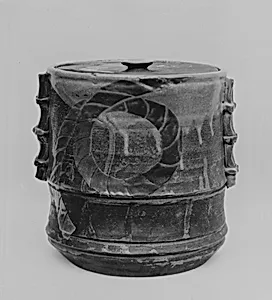
Jar with cover
Unknown Artist
1820
Medium
Faience with white craquelé glaze, and decoration in colored enamels (Kyoto ware)
Dimensions
H. 7 3/8 in. (18.7 cm); Diam. 6 3/4 in. (17.1 cm)
Classification
Ceramics
Culture & Period
Japan · Edo period (1615–1868)
Department
Asian Art
Museum
Metropolitan Museum of Art, New York, NY
Credit
Gift of Mrs. V. Everit Macy, 1923
Accession Number
23.225.276a, b
Rights
Public Domain
Art Historical Context
This elegant **Jar with Cover**, created around 1820 during Japan's Edo period (1615–1868), showcases the masterful craftsmanship of Kyoto ware. 7⅜ inches tall and 6¾ inches in, it is made of faience—a tin-glazed earthenware—with distinctive white craquelé glaze that forms fine, intentional cracks, lending a textured, aged patina. Vibrant decoration in colored enamels adds of color, likely featuring traditional motifs suited for domestic or ceremonial use. Kyoto ware, produced in the cultural heart of imperial Japan, was prized for its refinement and technical innovation. During the Edo era—a time of relative peace, urban prosperity, and booming artisanal traditions—potters perfected enamel overglaze techniques in specialized kilns. This allowed for durable, vivid designs that elevated everyday ceramics into objects of beauty, often used in tea ceremonies or as storage for precious goods. Today, this anonymous artist's work graces the Metropolitan Museum of Art's Asian Art collection, gifted by Mrs. V. Everit Macy in 1923. It embodies Japan's enduring ceramic legacy, bridging functionality and artistry for admirers worldwide.