
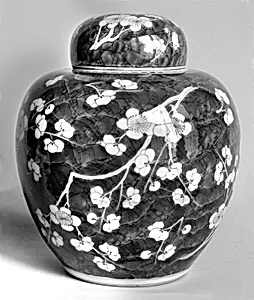
Jar with Cover
Unknown Artist
Medium
Porcelain
Dimensions
H. 10 in. (25.4 cm)
Classification
Ceramics
Culture & Period
China · Qing dynasty (1644–1911), Kangxi period (1662–1722)
Department
Asian Art
Museum
Metropolitan Museum of Art, New York, NY
Credit
Bequest of Benjamin Altman, 1913
Accession Number
14.40.312a, b
Rights
Public Domain
Tags
Art Historical Context
This exquisite *Jar with*, crafted in porcelain during thexi period (1662–1722) of China's Qing dynasty (16441911), stands at a graceful height of 10 inches25.4 cm). likely at the imperial kilns of Jingdezhen, the epicenter of porcelain artistry, such vessels exemplify the era's technical mastery and aesthetic refinement. The inclusion of a fitted cover suggests its practical use for storing precious commodities like tea, spices, or medicines, while its floral motifs—evident in the decorative tags—reflect the Kangxi court's fascination with nature's bounty, symbolizing prosperity and harmony. Kangxi porcelain marked a pinnacle in Chinese ceramics, blending innovation with tradition. Artisans achieved translucent bodies and vibrant glazes through advanced firing techniques, often imperial patronage that spurred export to Europe and beyond. Floral designs, common in this period, drew from scholarly painting traditions, transforming everyday objects into emblems of refined taste and cultural sophistication. Today, this jar graces the Metropolitan Museum of Art's Asian Art Department, a bequest from collector Benjamin Altman in 1913. It invites visitors to appreciate the enduring legacy of Qing ingenuity, where utility met unparalleled beauty.