
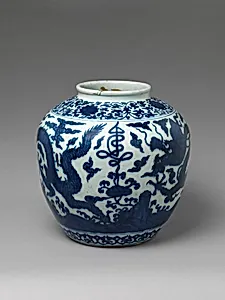
明嘉靖 景德鎮窯青花雙龍趕壽罐|Jar with dragon and stylized character for longevity (shou)
Unknown Artist
16th century
Medium
Porcelain painted in underglaze blue
Dimensions
H. 20 1/2 in. (52.1 cm); Diam. 20 in. (50.8 cm)
Classification
Ceramics
Culture & Period
China · Ming dynasty (1368–1644), Jiajing period (1522–66)
Department
Asian Art
Museum
Metropolitan Museum of Art, New York, NY
Credit
Gift of Elizabeth Milbank Anderson, 1920
Accession Number
20.144
Rights
Public Domain
Tags
Art Historical Context
This magnificent jar, crafted in the Jiajing period (1522–66) of Ming dynasty (1368–1644), hails from the renowned Jingdezhen kilns, the epicenter of imperial porcelain production. Standing an impressive 20½ inches tall and 20 inches wide, it exemplifies the era's technical mastery in underglaze blue porcelain—a technique where cobalt pigment is applied to the unfired clay body before a transparent glaze is added and the piece is fired at high temperatures. This method yielded vibrant, durable blue designs that wouldn't fade, making Jingdezhen wares prized worldwide. The jar's decoration features two dynamic dragons pursuing a stylized "shou" character, symbolizing longevity and good fortune—auspicious motifs deeply rooted in Chinese imperial culture. Dragons, as emblems of power and the emperor, were especially prominent during the Jiajing reign, reflecting Daoist influences and the ruler's quest for eternal life. Such large-scale vessels were likely used for storing precious goods like wine or oils in elite households or palaces. A generous gift to the Metropolitan Museum of Art in 1920, this jar invites visitors to marvel at Ming porcelain's blend of artistry and symbolism, a testament to China's enduring ceramic legacy.