
Jar with dragons
Unknown Artist
mid-16th century
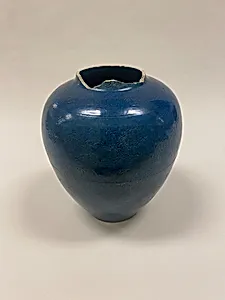
Medium
Porcelain with incised decoration under blue glaze (Jingdezhen ware)
Dimensions
H. 10 3/4 in. (27.3 cm); Diam. 9 in. (22.9 cm)
Classification
Ceramics
Culture & Period
China · Ming dynasty (1368–1644), Jiajing mark and period (1522–66)
Department
Asian Art
Museum
Metropolitan Museum of Art, New York, NY
Credit
Edward C. Moore Collection, Bequest of Edward C. Moore, 1891
Accession Number
91.1.384
Rights
Public Domain
Tags
Art Historical Context
This exquisite *Jar with Dragons*, crafted in mid-16th-century China during the Ming dynasty's Jiajing period (1522–66), exemplifies the pinnacle of imperial porcelain production at Jingdezhen, the world's renowned center for fine ceramics. Standing at 10 3/4 inches tall with a 9-inch diameter, this jar bears the Jiajing reign mark, signaling its creation under Emperor Jiajing, who favored bold, symbolic motifs. Dragons, powerful emblems of imperial authority, protection, and cosmic energy in Chinese culture, likely encircle the vessel, evoking the emperor's divine mandate to rule. The jar's medium—porcelain with incised decoration under a vibrant blue glaze—highlights innovative Ming techniques. Artisans at Jingdezhen incised intricate designs into the unfired clay body before applying the cobalt-blue glaze, which fired to a luminous depth in high-temperature kilns. This underglaze method ensured durability and a seamless integration of form and decoration, setting Ming wares apart from earlier dynasties and influencing global ceramics for centuries. Now part of the Metropolitan Museum of Art's Asian Art collection, gifted through the Edward C. Moore bequest in 1891, this jar invites visitors to appreciate the Ming era's fusion of artistry, technology, and symbolism—a testament to China's porcelain legacy.