
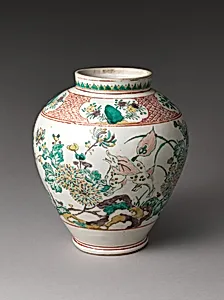
Jar with Mythical Qilin (Kirin) and Chrysanthemums
Unknown Artist
ca. 1660
Medium
Stoneware painted with colored enamels over transparent glaze (Hizen ware)
Dimensions
H. 11 1/4 in. (28.6 cm); Diam. 10 in. (25.4 cm); Diam. of rim: 4 3/4 in. (12.1 cm); Diam. of foot: 5 in. (12.7 cm)
Classification
Ceramics
Culture & Period
Japan · Edo period (1615–1868)
Department
Asian Art
Museum
Metropolitan Museum of Art, New York, NY
Credit
Dr. and Mrs. Roger G. Gerry Collection, Bequest of Dr. and Mrs. Roger G. Gerry, 2000
Accession Number
2002.447.54
Rights
Public Domain
Tags
Art Historical Context
This exquisite jar from Japan's Edo period (ca. 1660) the mastery of Hizen ware, renowned stoneware tradition from the Arita kilns in Hizen province. Standing 11¼ inches tall with a 10-inch diameter, it features a mythical qilin (kirin)—a chimeric beast with a deer's body, dragon scales, and ox tail—prancing amid blooming chrysanthemums and flowing leaves. The surface is adorned with vibrant colored enamels painted over a transparent glaze, a technique that allowed for bold, durable hues fired at lower temperatures after glazing. In Japanese culture, the qilin symbolizes good fortune, longevity, and the arrival of a wise ruler, embodying harmony and prosperity during the peaceful Edo era when ceramics flourished for both domestic use and export. Chrysanthemums, Japan's imperial flower, evoke autumn's beauty and endurance, often linked to nobility. These motifs reflect the era's fascination with nature and auspicious symbols, blending folklore with decorative elegance. Hizen ware, pivotal in Japan's porcelain export trade via the Dutch East India Company, elevated ceramics to fine art with its innovative overglaze enameling. This jar, from the Dr. and Mrs. Roger G. Gerry Collection at The Metropolitan Museum of Art, exemplifies the technical prowess and cultural pride of 17th-century Japanese artisans.