
Jardiniere
Unknown Artist
1700–1800
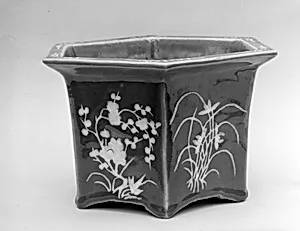
Medium
Porcelain
Dimensions
H. 6 3/8 in. (16.2 cm)
Classification
Jardiniere
Culture
Chinese
Department
The American Wing
Museum
Metropolitan Museum of Art, New York, NY
Credit
Bequest of Helen Winslow Durkee Mileham, 1954
Accession Number
55.111.17
Rights
Public Domain
Tags
Art Historical Context
This delicate porcelain jardinière, standing just 6⅜ inches (16.2 cm) tall, hails from China during the 18th century (1700–1800). Crafted by an unknown artist, it exemplifies the exquisite porcelain production of the Qing dynasty, renowned for its fine white kaolin clay body, glossy glazes, and intricate decorations—likely featuring floral motifs as suggested by its tags. Jardinières like this served as elegant plant stands or ornamental vessels, blending utility with artistry in domestic settings. Chinese export porcelain surged in popularity during this era, with vast quantities shipped to Europe and America via maritime trade routes. Its presence in The Met's American Wing highlights how such pieces graced colonial and early American households, symbolizing luxury and global connectivity. Collectors prized their translucency and vibrant underglaze colors, techniques perfected at imperial kilns like Jingdezhen. Generously bequeathed by Helen Winslow Durkee Mileham in 1954, this jardinière invites us to imagine 18th-century parlors alive with exotic blooms, bridging Eastern craftsmanship with Western tastes in a timeless display of cultural exchange.