
Jarocho Corridor
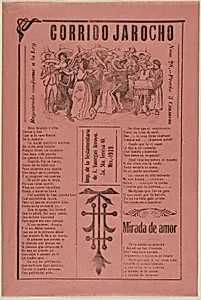
Medium
Relief etching on paper
Dimensions
29.8 × 20 cm (11 3/4 × 7 7/8 in.)
Classification
relief etching
Department
Prints and Drawings
Museum
Art Institute of Chicago
Accession Number
52232
Rights
Public Domain
Art Historical Context
Step into the vibrant world of early 20th-century Mexican printmaking with *Jarocho Corridor*, an undated relief etching by José Guadalupe Posada (1852–1913). Measuring 29.8 × 20 cm, this intimate work on paper captures Posada's signature satirical flair, likely evoking the lively son jarocho traditions of Veracruz region's mestizo culture—think rhythmic dances, string music, and colorful festivals along coastal corridors. Posada, a pioneering figure in Mexico's graphic arts, mastered relief etching, a technique that carved images into wood or metal blocks for inked impressions, allowing affordable mass production of broadsheets sold in markets. His bold, black-and-white style blended folk art with biting social commentary, foreshadowing the iconic calaveras (skeleton motifs) of Día de los Muertos. Works like this bridged elite art and popular culture, critiquing class, politics, and daily life with humor and irreverence. Housed in the Art Institute of Chicago's Prints and Drawings Department, *Jarocho Corridor* exemplifies Posada's enduring legacy: democratizing art for everyday Mexicans while influencing modern graphic designers from Diego Rivera to contemporary street artists. A window into Mexico's revolutionary era, it invites us to dance with history's spirited skeletons.
About the Artist
José Guadalupe Posada · 1852–1913
José Guadalupe Posada (1852-1913) was a Mexican printmaker and engraver who revolutionized popular art and created some of the most iconic images in Mexican culture. Working primarily with publisher Antonio Vanegas Arroyo, he produced over 20,000 images during his career—inexpensive broadsheets sold for a penny on colored paper that made his art accessible to even the poorest workers. He transform...