
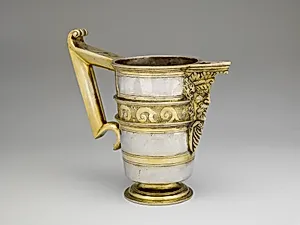
Jarro de Pico
late 16th century
Medium
Silver, parcel-gilt
Dimensions
Overall (confirmed): max ht. 7 5/8; ht. from upper edge of body: 6 5/16 x 8 3/8 x 4 3/16 in., 2.1lb. (19.4; 16 x 21.3 x 10.6 cm, 0.9474kg)
Classification
Metalwork-Silver
Culture
Spanish, Valladolid
Department
European Sculpture and Decorative Arts
Museum
Metropolitan Museum of Art, New York, NY
Credit
Purchase, Friends of European Sculpture and Decorative Arts Gifts, in memory of Olga Raggio, 2009
Accession Number
2009.227
Rights
Public Domain
Tags
Art Historical Context
Behold the *Jarro de Pico*, exquisite late 16th-century silver pitcher crafted by Hernando Solis, master silversmith from Valladolid, Spain. This parcel-gilt masterpiece—measuring about 7⅝ inches tall and weighing just over 2 pounds— a graceful, spout-like form ideal for pouring wine or water, evoking the Renaissance elegance of Spanish domestic luxury. The partial gilding, where thin gold leaf is applied to silver for a shimmering contrast, highlights Solis's skillful chasing and embossing techniques, creating a luminous surface that catches the light. Hailing from Valladolid, a thriving artistic hub during Spain's Golden Age under Habsburg rule, this jar reflects the era's opulent metalwork tradition. Silversmiths like Solis drew on Italian Renaissance influences, often incorporating profile motifs (as suggested by its tagging), to adorn tableware for the elite. Such pieces were status symbols, blending functionality with artistry in grand households or ecclesiastical settings. Acquired by The Metropolitan Museum of Art in 2009 through generous gifts, the *Jarro de Pico* stands as a testament to Valladolid's silversmithing prowess. Its survival offers a glimpse into the refined tastes and technical virtuosity of 16th-century Spain, inviting us to appreciate the tactile beauty of historical craftsmanship.