
Jasper Lentoid
Unknown Artist
ca. 1450–1375 BCE
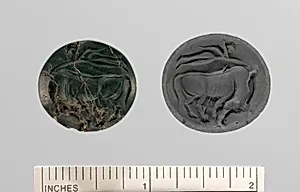
Medium
Jasper
Dimensions
H.: 7/8 in. (2.3 cm)
Classification
Gems
Culture & Period
Minoan · Late Minoan II–IIIA
Department
Greek and Roman Art
Museum
Metropolitan Museum of Art, New York, NY
Credit
Bequest of Richard B. Seager, 1926
Accession Number
26.31.291
Rights
Public Domain
Art Historical Context
This exquisite jasper lentoid, dating to around 1450–1375 BCE, hails from the vibrant Minoan culture of Late Minoan II–IIIA on Crete. Measuring just 7/8 inch (2.3 cm) in height, this small, lentil-shaped gem—classified among ancient seals—was meticulously carved from durable red jasper, a semiprecious prized for its hardness and rich color. Lentoids like this were common in Minoan society, serving as personal seals for imprinting clay documents, marking ownership, or possibly as protective amulets. Minoan art flourished during the Bronze Age palace era, with grand complexes like Knossos showcasing advanced engineering and vivid frescoes. These gems reflect that ingenuity in miniature: artisans expertly engraved intaglio designs (likely motifs of nature, animals, or symbols, though specifics here are unnoted) using fine tools, demonstrating remarkable precision on such a tiny scale. They offer a glimpse into Minoan administrative sophistication and daily life amid a thalassocratic (sea-power) civilization. Bequeathed to the Metropolitan Museum of Art in 1926 by archaeologist Richard B. Seager, who excavated Minoan sites, this lentoid connects us to Crete's enigmatic world—destroyed by natural disasters yet enduring through such delicate treasures. A testament to ancient craftsmanship!