
Jean Charles Folard
1751 to 1775
Medium
color wash manner
Classification
Department
CG-E
Museum
National Gallery of Art, Washington, D.C.
Credit
Rosenwald Collection
Accession Number
1946.21.173
Rights
Public Domain
Art Historical Context
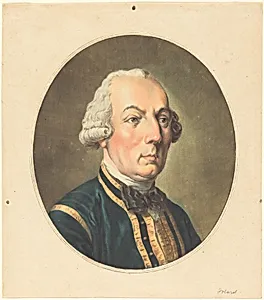
**Jean-Charles Folard** is a striking 18th-century portrait print by French engraver Antoine-François Sergent, created between 1751 and 1775. Housed in the National Gallery of Art's Rosenwald Collection (Department CG-E), this work depicts Jean-Charles de Folard, a renowned French military theorist and officer (1669–1752). Folard gained fame for his innovative writings on tactics, particularly advocating phalanx-like column formations in *La Polybe*, influencing military thought during the Enlightenment era. Sergent's mastery shines in the "color wash manner" technique—a sophisticated printmaking method that mimics the fluid, translucent effects of watercolor washes. By layering colored inks with aquatint-like etching, artists like Sergent achieved painterly depth and subtle tonal gradations unattainable in traditional line engravings. This innovative approach democratized colorful portraiture, making high-art effects accessible beyond oil paintings. As a period piece, the print captures the intellectual vibrancy of pre-Revolutionary France, honoring Folard's legacy amid debates on warfare and strategy. Visitors will appreciate its delicate hues and lifelike expression, a testament to printmaking's evolution as both art and historical record.