
Jewelled Pendant
Unknown Artist
19th century
Medium
Nephrite, white with very faint grayish tint
Dimensions
H. 3 1/16 in. (7.8 cm); W. 2 3/8 in. (6 cm); D. 3/8 in. (0.9 cm)
Classification
Jade
Culture
India
Department
Asian Art
Museum
Metropolitan Museum of Art, New York, NY
Credit
Gift of Heber R. Bishop, 1902
Accession Number
02.18.789
Rights
Public Domain
Tags
Art Historical Context
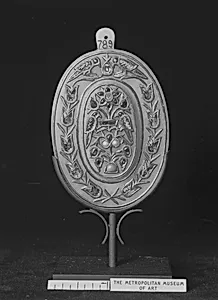
This delicate *Jewelled Pendant*, crafted in 19th-century India from nephrite jade—white with a subtle grayish tint—exemplifies the artistry of South Asian jade carving. Measuring just 3 1/16 inches high, 2 3/8 inches wide, and 3/8 inch deep, its petite form suggests it was designed as personal adornment, perhaps suspended from a chain or necklace. The smooth, translucent nephrite, prized for its durability and luminous quality, allowed carvers to achieve intricate details in a compact scale. The pendant features motifs of birds and flowers, recurring symbols in Indian decorative arts that evoke nature's harmony, fertility, and the fleeting beauty of life. Such designs reflect influences from Mughal traditions, where jade was imported and masterfully worked into jewelry for elites. Though the artist remains unknown, the piece highlights nephrite's cultural prestige in India, often reserved for high-status objects blending functionality with symbolism. A generous gift from Heber R. Bishop in 1902, this pendant now graces the Metropolitan Museum of Art's Asian Art department, inviting visitors to appreciate the refined elegance of Indian craftsmanship from a transformative era.