
英一蝶筆 地蔵菩薩図|Jizō Bosatsu
1667–98
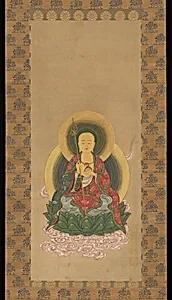
Medium
Hanging scroll; ink, color, and gold paint on paper
Dimensions
Overall with mounting: 57 1/4 × 15 7/16 in. (145.4 × 39.2 cm) Image: 25 in. × 10 5/8 in. (63.5 × 27 cm) Overall with knobs: 57 1/4 × 17 1/4 in. (145.4 × 43.8 cm)
Classification
Paintings
Culture & Period
Japan · Edo period (1615–1868)
Department
Asian Art
Museum
Metropolitan Museum of Art, New York, NY
Credit
The Howard Mansfield Collection, Purchase, Rogers Fund, 1936
Accession Number
36.100.33
Rights
Public Domain
Tags
Art Historical Context
Hanabusa Itchō's *Jizō Bosatsu* (英一蝶筆 地蔵菩薩図), created during Japan's Edo period (1615–1868), captures the compassionate essence of Jizō, the beloved Bodhisattva revered as a protector of children, travelers, and souls in Buddhist tradition. Rendered as a hanging scroll in ink, color, and gold paint on paper, this work exemplifies the refined elegance of Japanese religious art, where scrolls were unrolled for meditative viewing in homes or temples. Itchō, active from around 1667 to 1698, blended literati influences with a playful ukiyo-e spirit, though this serene depiction highlights his skill in portraying divine figures with gentle humanity. The use of gold paint evokes otherworldly radiance, a technique rooted in Yamato-e traditions, enhancing Jizō's role as the "Earth Treasury" Bodhisattva who vows to save all beings from suffering. During the Edo era's cultural flourishing under the Tokugawa shogunate, such artworks bridged elite connoisseurship and popular devotion, often displayed seasonally. Measuring about 25 by 10.5 inches in its image area, this scroll from The Metropolitan Museum of Art's Asian Art collection invites viewers to reflect on themes of mercy amid everyday life. Acquired through The Howard Mansfield Collection in 1936, *Jizō Bosatsu* stands as a testament to Itchō's versatility before his exile for satirical works, offering a window into Edo Japan's harmonious fusion of spirituality and artistry.
About the Artist
Hanabusa Itchō · 1652–1724
Japanese, 1652–1724