
Joel Barlow
Medium
Classification
Department
Smithsonian Collection
Museum
Smithsonian American Art Museum
Credit
National Portrait Gallery, Smithsonian Institution; gift of Mr. and Mrs. Joel Barlow
Accession Number
NPG.76.42
Rights
Public Domain
Tags
Art Historical Context
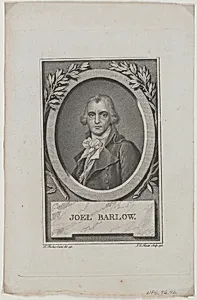
This enchanting 1793 print portrait by French engraver Louis Charles Ruotte (1754–1806) captures the multifaceted American figure Joel Barlow, depicted with a distinctive bowtie and an olive branch symbolizing peace. Produced as part of the Smithsonian American Art Museum's collection—gifted by Mr. and Mrs. Joel Barlow—it exemplifies the era's printmaking tradition, where detailed engravings allowed for widespread dissemination of prominent likenesses through affordable reproductions. Joel Barlow (1752–1812) was a Renaissance man of the early American republic: poet, writer, journalist, lawyer, and diplomat (often titled "minister" in his consular roles). Created amid the French Revolution, when Barlow resided in Paris advocating for democratic ideals, this portrait reflects his intellectual prominence and transatlantic influence. Prints like this bridged continents, immortalizing Enlightenment thinkers for admirers back home. Ruotte's precise engraving technique highlights Barlow's dignified gaze and symbolic accessories, underscoring the cultural role of portrait prints in celebrating civic heroes. A gem in the National Portrait Gallery's holdings, it invites visitors to ponder the intersections of art, politics, and personality in revolutionary times.