
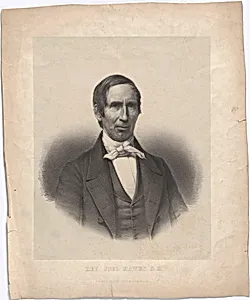
Joel Hawes
Medium
Classification
Department
Smithsonian Collection
Museum
Smithsonian American Art Museum
Credit
National Portrait Gallery, Smithsonian Institution
Accession Number
S/NPG.86.153
Rights
Public Domain
Tags
Art Historical Context
**Joel Hawes** is a striking print portrait from around 1849, crafted by Francis D'Avignon (1813–c. 1871), a mid-19th-century artist whose work graces the Smithsonian American Art Museum's collections. This piece captures Joel Hawes, a prominent male clergyman, in a format typical of the era's portraiture, emphasizing dignity and character through precise lines and shading. Housed in the National Portrait Gallery, Smithsonian Institution, it exemplifies how prints served as accessible reproductions of notable figures. In the antebellum United States, clergy like Hawes held significant cultural sway, guiding communities amid rapid social changes. Prints such as this one—likely an engraving or lithograph—democratized portraiture, allowing wider dissemination beyond oil paintings reserved for the elite. D'Avignon's technique would have prioritized clarity and detail to convey authority and piety, making the image a tool for inspiration and recognition. Today, this artwork underscores the intersection of faith, identity, and visual culture in 19th-century America, inviting visitors to reflect on how everyday media immortalized public leaders. A testament to the Smithsonian's rich holdings, it reminds us of portraiture's power to preserve history.