
John Barclay
1551 to 1600
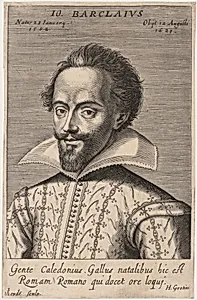
Medium
engraving
Dimensions
sheet: 15 × 9.7 cm (5 7/8 × 3 13/16 in.)
Classification
Department
CG-E
Museum
National Gallery of Art, Washington, D.C.
Credit
Rosenwald Collection
Accession Number
1950.14.173
Rights
Public Domain
Art Historical Context
Discover the delicate engraving *John Barclay* by Jacob van der Hey, created between 1551 and 1600. This intimate print, measuring just 15 × 9.7 cm (5 7/8 × 3 13/16 in.), captures the precision of 16th-century Northern European printmaking. Housed in the National Gallery Art's Rosenwald Collection the CG-E Department, it exemplifies the era's fascination with portraiture through the reproducible medium of engraving. Engraving, a technique where intricate lines are incised into a metal plate inking and printing, allowed artists like van der Heyden—active in the Flemish-Dutch tradition—to achieve remarkable detail and tonal subtlety in small formats. During the late Renaissance, such prints democratized access to likenesses of notable figures, bridging elite portraiture with broader audiences. The modest scale suggests it was designed for collectors' albums or personal study, highlighting the growing market for fine prints. This work reflects the cultural vibrancy of the period, when humanism and scholarly pursuits flourished. John Barclay, likely a portrait subject of intellectual prominence, embodies the era's emphasis on individual legacy preserved through art. A gem of the Rosenwald Collection, it invites visitors to appreciate the enduring craft of engraving.