
John Hancock
Medium
Classification
Department
Smithsonian Collection
Museum
Smithsonian American Art Museum
Credit
National Portrait Gallery, Smithsonian Institution
Accession Number
NPG.77.86
Rights
Public Domain
Tags
Art Historical Context
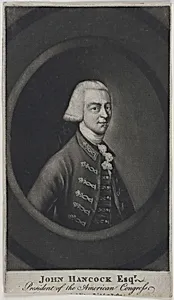
This portrait print of John Hancock, created by an unidentified artist in 1776, captures one of America's most iconic Founding Fathers at the height of the Revolutionary fervor. Hancock, a wealthy Boston merchant and Massachusetts statesman, is best remembered as the first and most prominent signer of the Declaration of Independence—his bold, oversized signature became a symbol of defiance against British rule. Produced in the very year of that historic document, this image likely served as a timely tribute to his leadership in the patriot cause. As a print from the Smithsonian American Art Museum's collection (on loan from the National Portrait Gallery), the work exemplifies early American graphic arts. Prints were revolutionary in their accessibility, allowing portraits of heroes like Hancock to be reproduced and distributed widely across the colonies. This medium democratized fame, fostering national identity amid the fight for independence. Hancock's image endures as a cultural touchstone, embodying colonial resolve and entrepreneurial spirit. Visitors to the Smithsonian can appreciate how such artifacts bridged art and politics, rallying support for the new nation.