
Joseph-Agricol Viala, after Sablet
Medium
Color aquatint
Dimensions
Sheet: 10 in. × 7 3/8 in. (25.4 × 18.8 cm)
Classification
Prints
Department
Drawings and Prints
Museum
Metropolitan Museum of Art, New York, NY
Credit
Gertrude and Thomas Jefferson Mumford Collection, Gift of Dorothy Quick Mayer, 1942
Accession Number
42.119.423
Rights
Public Domain
Tags
Art Historical Context
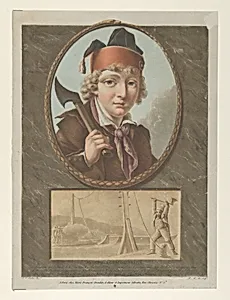
This evocative color aquatint portrait, *Joseph-Agricol Viala, Sablet*, captures the youthful revolutionary hero Joseph Agricol Viala 1795, during the turbulent aftermath of the French Revolution. by engravers Pierre-Michel Alix and François Sablet after an original by Sablet, it Viala—a boy martyr slain in 1793 while defending the Republic—gripping axes, symbols of radical fervor and resistance against royalist forces. Printed on a modest sheet of 10 × 7⅜ inches, the work served as patriotic propaganda, immortalizing Viala's sacrifice to inspire the revolutionary cause. The medium of color aquatint was revolutionary itself, pioneered in the late 18th century for its ability to mimic watercolor's soft tones and vibrant hues through etched resin grounds and multiple ink plates. Alix, a master of the technique, brought Sablet's dramatic portrait to life with nuanced shading that highlights Viala's determined gaze and muscular poise, blending neoclassical idealism with raw emotional power. Housed in the Metropolitan Museum of Art's Drawings and Prints department (Gertrude and Thomas Jefferson Mumford Collection, 1942), this print exemplifies how art fueled the era's ideological battles, turning personal tragedy into collective myth.