
Joseph Fröhlich
Medium
Hard-paste porcelain
Dimensions
Height: 9 1/2 in. (24.1 cm)
Classification
Ceramics-Porcelain
Culture
German, Meissen
Department
European Sculpture and Decorative Arts
Museum
Metropolitan Museum of Art, New York, NY
Credit
Gift of Irwin Untermyer, 1964
Accession Number
64.101.126
Rights
Public Domain
Tags
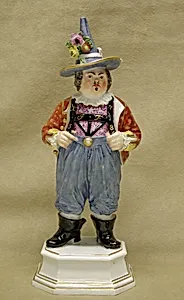
Art Historical Context
This exquisite hard-paste porcelain figurine *Joseph Fröhlich* (1738), stands at 9½ inches tall and exemplifies the pinnacle of 18th-century German ceramics from the Meissen Manuf. Modeled by the Johann Joachim Kändlerchief sculptor at Meissen since 1731—and painted Christian Friedrich Boetius it captures a male figure amid floral elements, blending human form with nature in a delicate, lively composition. Meissen, founded in 1710 near Dresden, revolutionized European porcelain by perfecting hard-paste porcelain, a durable, translucent material previously a closely guarded Chinese secret. This breakthrough fueled the Rococo era's taste for ornate, whimsical decorative arts, with Kändler's figurines—often inspired by theater, mythology, or daily life—showcasing intricate modeling, vibrant enamels, and gold accents. *Joseph Fröhlich* reflects this technical virtuosity and cultural prestige, as Meissen pieces became coveted status symbols across Europe's courts. Today, housed in the Metropolitan Museum of Art's European Sculpture and Decorative Arts department (gift of Irwin Untermyer, 1964), the figurine invites visitors to marvel at its fine details: the subtle play of light on porcelain skin, the rhythmic flowers, and the era's joyful spirit. A testament to German innovation, it bridges artistry and craftsmanship in porcelain history.