
Medium
Classification
Department
Smithsonian Collection
Museum
Smithsonian American Art Museum
Credit
National Portrait Gallery, Smithsonian Institution; gift of Mr. and Mrs. Paul Mellon
Accession Number
S/NPG.74.39.11.21
Rights
Public Domain
Tags
Art Historical Context
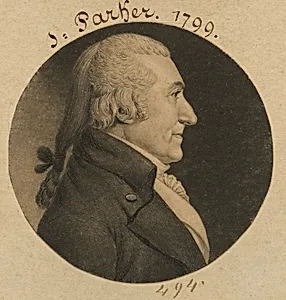
**Josiah Parker** (1799) is a striking profile portrait print by Charles Balthazar Févret de Saintémin, a Frenchaver who fled the Revolution and brought innovative portraiture to early America. Capturing Virginia statesman Josiah Parker—a farmer, militia leader, and delegate—this work exemplifies Saint-Mémin's signatureognotrace technique. He used a mechanical pantograph to trace sitters' profiles precisely, then engraved them onto copper plates for detailed, affordable prints, making elite likenesses accessible beyond oil paintings. Created in 1799, amid the young nation's post-Revolutionary fervor, the portrait honors Parker's multifaceted life: a planter-soldier who fought in the Revolution and served in Congress, embodying Virginia's gentry class. These prints were popular souvenirs for America's emerging middle class, blending European precision with democratic ideals—over 900 such portraits survive, chronicling founders and regional figures. Housed in the Smithsonian American Art Museum through the generosity of Mr. and Mrs. Paul Mellon, this piece invites us to ponder how printmaking democratized portraiture, preserving the faces and stories of a formative era. A testament to resilience and representation! (198 words)