
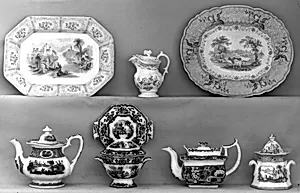
Jug
before 1830
Medium
Blue printed ware
Dimensions
Height: 5 1/4 in. (13.3 cm)
Classification
Ceramics-Pottery
Culture
British, Longport
Department
European Sculpture and Decorative Arts
Museum
Metropolitan Museum of Art, New York, NY
Credit
Gift of Mrs. Isaac Gibson Jaffray, in memory of her husband, 1898
Accession Number
98.1.51a, b
Rights
Public Domain
Tags
Art Historical Context
This charming jug, crafted by George Phillips Longport, Staffordshire, England, before 1830, exemplifies early 19th-century British ceramics at its finest. Standing just 5¼ inches tall, this petite pottery piece from the blue printed ware tradition was designed for everyday use, yet its delicate floral motifs—evident in the tagged "Flowers" decoration—elevate it to decorative art. Longport, a bustling pottery hub in the Staffordshire Potteries district, was renowned for producing affordable, mass-market tableware that graced homes across Britain and beyond. The medium of blue printed ware highlights a revolutionary technique: designs were etched onto copper plates, inked in cobalt blue, and transferred onto unglazed earthenware before firing. This underglaze transfer printing, perfected in Staffordshire around 1780, allowed for intricate patterns like these blooming flowers to be reproduced quickly and vibrantly, resisting wear from use or washing. It democratized beauty, making ornate ceramics accessible beyond the elite. Housed in the Metropolitan Museum of Art's European Sculpture and Decorative Arts Department since 1898 as a gift from Mrs. Isaac Gibson Jaffray, this jug captures the Industrial Revolution's blend of craftsmanship and innovation. A testament to British pottery's global influence, it invites visitors to appreciate how humble objects carried artistic elegance into daily life.