
Jug
ca. 1700
Medium
Tin-glazed earthenware; pewter
Dimensions
Height (with cover): 11 3/16 in. (28.4 cm)
Classification
Ceramics-Pottery
Culture
German, Nuremberg
Department
European Sculpture and Decorative Arts
Museum
Metropolitan Museum of Art, New York, NY
Credit
Gift of R. Thornton Wilson, in memory of Florence Ellsworth Wilson, 1954
Accession Number
54.147.49a–g
Rights
Public Domain
Tags
Art Historical Context
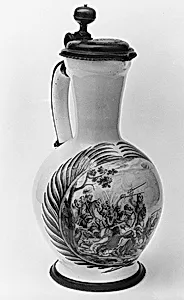
This elegant jug, crafted around 1700 by Nuremberg potters Abraham Helmhack and Wolf Rössler, exemplifies the city's renowned tradition of tin-glazed earthenware, also known as faience. Standing 11 3/16 inches tall with its pewter lid, this piece from the Metropolitan Museum of Art's European Sculpture and Decorative collection was a prized household object in Baroque-era Germany. Nuremberg, a hub of craftsmanship and guilds, produced such ceramics as affordable yet luxurious alternatives to costly porcelain, with the tin glaze providing a brilliant white surface for vibrant painted designs that resisted wear. The jug's decoration bursts with dynamic energy, featuring vivid scenes of soldiers wielding swords astride horses—likely evoking military triumphs or chivalric tales popular in early 18th-century Europe. These motifs reflect the era's fascination with warfare and heroism, amid the ongoing conflicts like the War of the Spanish Succession. The bold colors and lively figures showcase the potters' skill in overglaze enameling, a technique that brought tin-glazed pottery to artistic heights. As a gift to the Met in 1954, this jug offers a window into everyday opulence, blending utility with storytelling artistry. Visitors will appreciate its tactile charm and the enduring legacy of Nuremberg's master ceramicists.