
Jug
Unknown Artist
480–400 BCE
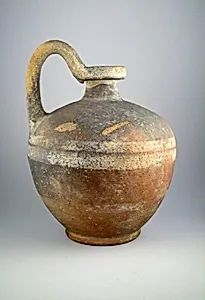
Medium
Terracotta
Dimensions
8 1/16in. (20.5cm)
Classification
Vases
Culture & Period
Cypriot · Cypro-Classical I
Department
Greek and Roman Art
Museum
Metropolitan Museum of Art, New York, NY
Credit
The Cesnola Collection, Purchased by subscription, 1874–76
Accession Number
74.51.367
Rights
Public Domain
Art Historical Context
This elegant terracotta jug hails from ancient Cyprus during the Cypro-Classical period (480–400 BCE), a when the island thrived as a cultural crossroads between Greek, Phoenician, and Near Eastern. Standing at just over 8 inches tall, it exemplifies the practical yet refined pottery of Cypriot artisans, crafted for everyday use such as pouring water, wine, or oils in households or rituals. As part of the vast classification of ancient vases, its modest size belies its role in illuminating daily life on this Mediterranean island. Terracotta, fired clay abundant on Cyprus, allowed for durable, lightweight vessels that were wheel-thrown and often decorated with simple painted motifs—though this example's subtle form speaks to the period's shift toward more restrained, geometric styles influenced by broader Eastern Mediterranean trends. The Cypro-Classical era marked Cyprus's political fragmentation into city-kingdoms, fostering distinctive local arts that blended functionality with subtle aesthetic appeal. Acquired as part of The Cesnola Collection—assembled by diplomat Luigi Palma di Cesnola and purchased by subscription in 1874–76—this jug now resides in the Metropolitan Museum of Art's Greek and Roman Art Department. It offers visitors a tangible link to Cyprus's ancient ingenuity, reminding us how ordinary objects preserve extraordinary histories.