
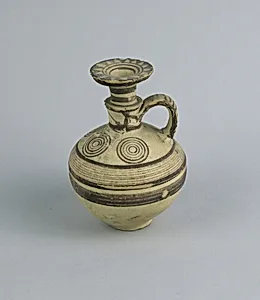
Jug
Unknown Artist
Medium
Terracotta
Dimensions
H. 3 7/8 in. (9.9 cm)
Classification
Vases
Culture & Period
Cypriot · Iron Age
Department
Greek and Roman Art
Museum
Metropolitan Museum of Art, New York, NY
Credit
The Cesnola Collection, Purchased by subscription, 1874–76
Accession Number
74.51.452
Rights
Public Domain
Art Historical Context
This delicate terracotta jug, hailing from ancient Cyprus during the Iron Age (roughly 1050–333 BCE), exemplifies the everyday craftsmanship of a vibrant Mediterranean culture at the crossroads of trade and influence. Standing just 3 7/8 inches (9.9 cm) tall, its modest size suggests it was likely used for pouring liquids like oil, wine, or water in domestic settings—vessels like this were essential to daily life, from households to rituals. Crafted from fired clay, a durable and abundant medium, the jug reflects Cypriot potters' skill in shaping functional forms on the wheel or by hand before low-temperature firing, which gave terracotta its characteristic reddish hue and earthy texture. Though the artist remains unknown, such vases highlight Cyprus's role as a cultural melting pot, blending local traditions with Greek, Phoenician, and Near Eastern motifs during the Iron Age, a period of iron tool innovation and expanding maritime networks. Acquired through The Cesnola Collection—assembled by diplomat Luigi Palma di Cesnola and purchased by subscription for the Metropolitan Museum of Art in 1874–76—this jug offers a tangible link to Cyprus's enigmatic past. Displayed in the Greek and Roman Art department, it invites us to ponder the hands that molded it and the stories it silently held.