
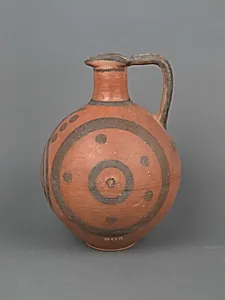
Jug
Unknown Artist
750–600 BCE
Medium
Terracotta
Dimensions
8 3/8in. (21.3cm)
Classification
Vases
Culture & Period
Cypriot · Cypro-Archaic I
Department
Greek and Roman Art
Museum
Metropolitan Museum of Art, New York, NY
Credit
The Cesnola Collection, Purchased by subscription, 1874–76
Accession Number
74.51.605
Rights
Public Domain
Art Historical Context
This elegant terracotta jug hails from ancient Cyprus during the Cypro-Archaic I period (750–600 BCE), time when the island served as a vibrant cultural crossroads between the eastern Mediterranean, Near East, and emerging Greek world. Standing at just 8 3/8 inches (21.3 cm) tall, it exemplifies the practical yet refined pottery of Cypriot artisans, who crafted such vessels for everyday use—likely for pouring water, wine, or oils in households or rituals. Made from fired clay, a durable medium well-suited to Cyprus's abundant resources, the jug reflects the period's advancements in wheel-thrown pottery techniques, producing sleek forms with functional spouts and handles. Cypriot vases like this often featured simple, geometric designs or bichrome slips, blending local traditions with influences from Phoenician and Egyptian neighbors, highlighting Cyprus's role in early trade networks. Acquired as part of The Cesnola Collection at The Metropolitan Museum of Art (purchased by subscription, 1874–76), this piece offers a window into Cypro-Archaic life, where humble jugs bridged the domestic and sacred spheres. Though by an unknown artist, its survival underscores the enduring legacy of Cypriot craftsmanship.