
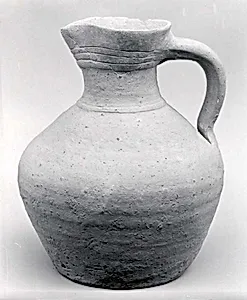
Jug
Unknown Artist
ca. 3rd–7th century CE
Medium
Ceramic
Dimensions
8.5 in. (21.59 cm)
Classification
Ceramics-Vessels
Culture & Period
Sasanian · Sasanian
Department
Ancient Near Eastern Art
Museum
Metropolitan Museum of Art, New York, NY
Credit
Rogers Fund, 1934
Accession Number
34.107.26
Rights
Public Domain
Art Historical Context
This elegant ceramic jug hails from the Sasanian Empire (ca. 3rd–7th century CE), powerhouse of ancient Persia that stretched across modern-day Iran and beyond. Standing at 8.5 inches (21.59 cm) tall, it exemplifies everyday vessels crafted for practical use—likely for pouring water, wine, or oils in households or elite settings. Acquired through the Rogers Fund in 4, it now graces the Metropolitan Museum of Art Department of Ancient Near Eastern Art offering a tangible glimpse into Sasanian material culture. Sasanian ceramics like this jug highlight the empire's sophisticated pottery traditions, often wheel-thrown and fired to achieve durability for daily life. The Sasanians, who ruled from 224 to 651 CE as rivals to Rome and Byzantium, blended Mesopotamian influences with innovative techniques, producing functional wares that supported a vibrant urban society centered on Zoroastrianism and imperial grandeur. Though the artist remains unknown, such vessels underscore the skilled, anonymous craftsmanship that sustained Persian households. Today, this unassuming jug invites us to ponder the rhythms of ancient life: hands shaping clay, kilns glowing under desert skies, and stories poured from its spout across centuries. A quiet testament to Sasanian ingenuity!