
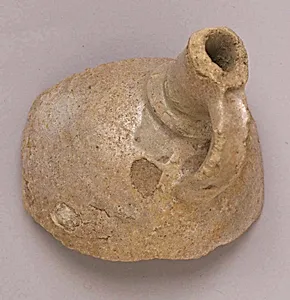
Jug
Unknown Artist
3rd–7th century
Medium
Earthenware; glazed
Classification
Ceramics
Department
Islamic Art
Museum
Metropolitan Museum of Art, New York, NY
Credit
Rogers Fund, 1932
Accession Number
32.150.357
Rights
Public Domain
Tags
Art Historical Context
Welcome to the Islamic Art galleries at the Metropolitan Museum of Art, where this unassuming yet remarkable **Jug** (3rd–7th century offers a window into the dawn of ceramic innovation in the early Islamic world. Crafted from earthenware and coated with a glossy glaze, this vessel exemplifies the practical artistry of pre- and early Islamic potters in regions like Mesopotamia or Persia. Acquired through the Rogers Fund in 2, it highlights everyday objects that bridged utility and emerging aesthetic traditions. The use of glazing on earthenware was a pivotal technique during this era (roughly 200–700 CE), transforming porous clay into durable, waterproof containers ideal for storing water, oils, or wine. This method, refined from ancient Near Eastern practices, allowed for vibrant colors and smooth surfaces, foreshadowing the opulent tilework and lusterware that defined later Islamic ceramics. Jugs like this were household staples, reflecting a culture where functionality met subtle decoration amid the expansive trade networks of the Sasanian and early Umayyad periods. Though the artist remains unknown, the jug's survival speaks to the resilience of these crafts. It invites us to appreciate how simple forms laid the groundwork for one of the world's most celebrated ceramic legacies—proof that beauty often begins in the everyday. (198 words)