
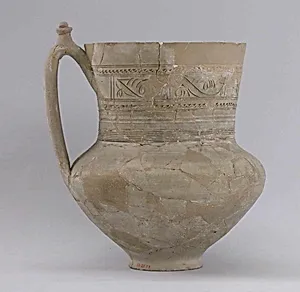
Jug
Unknown Artist
late 8th–first 9th century
Medium
Earthenware; slip covered and incised, unglazed
Classification
Ceramics
Department
Islamic Art
Museum
Metropolitan Museum of Art, New York, NY
Credit
Rogers Fund, 1936
Accession Number
36.20.39
Rights
Public Domain
Tags
Art Historical Context
This unglazed earthenware, crafted by an unknown artist in the 8th to early 9th century, early Islamic ceramics from the Abbasid era—a time of cultural flourishing across the Islamic world, from to Persia. Acquired through the Rogers Fund in 6 and now housed in the Metropolitan Museum of's Islamic Art Department, reflects the everyday artistry of a period when pottery production boomed, fueled by trade along the Silk Road and advancements in kilns and clays. The jug's surface is adorned with slip—a creamy liquid clay—applied and then incised with fine lines or patterns before firing, creating textured, tactile designs that catch the light. This sgraffito technique (from Italian for "scratched") was innovative for its era, allowing artisans to reveal contrasting clay colors beneath without costly glazes. Unglazed earthenware like this was practical for households, holding water or oils while showcasing subtle decorative motifs inspired by nature or geometry, hallmarks of Islamic aesthetics that avoided figural representation. As a humble yet sophisticated vessel, this jug highlights how ceramics bridged utility and beauty in early Islamic society, influencing later traditions like lusterware. Visitors can appreciate its rustic charm up close, a window into the skilled hands of anonymous potters shaping daily life over a millennium ago.