
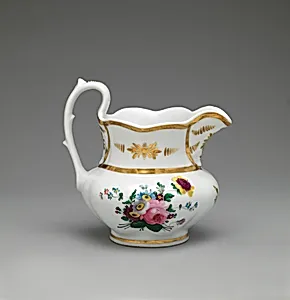
Jug
ca. 1832
Medium
Porcelain
Dimensions
7 5/8 x 8 1/8 in. (19.4 x 20.6 cm)
Classification
Jug
Culture
American
Department
The American Wing
Museum
Metropolitan Museum of Art, New York, NY
Credit
Rogers Fund, 1914
Accession Number
14.118.2
Rights
Public Domain
Tags
Art Historical Context
This elegant porcelain jug, crafted by Tucker and Hemph around 1832, exemplifies early American ingenuity in fine ceramics. Produced at the Tucker China Factory in—the nation's first successful porcelain manufactory—the piece measures 7⅝ x 8⅛ inches and reflects the ambitious efforts of American artisans to rival European imports during the early 19th century. through the Rogers Fund in 4, it now graces The American Wing at The Metropolitan Museum of Art. Tucker, known for its delicate hard-paste body and intricate decorations, marked a pivotal moment in U.S. industrial history. Operating from 1828 to 1838, the factory employed skilled European-trained potters to create wares that captured the refined tastes of the growing American middle class. Floral motifs, as suggested by the jug's design tags, were a hallmark, often hand-painted in vibrant colors to evoke the natural beauty celebrated in neoclassical and Romantic-era aesthetics. As a functional yet decorative object, this jug highlights the cultural shift toward domestic luxury in antebellum America, blending utility with artistry. Visitors will appreciate its crisp white glaze and graceful form, a testament to the short-lived but influential Tucker enterprise that bridged handmade craft and emerging mass production.