
Jug
Unknown Artist
15th–16th century
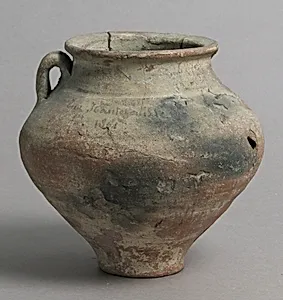
Medium
Earthenware
Dimensions
Overall: 5 1/16 x 5 1/4 in. (12.9 x 13.4 cm)
Classification
Ceramics
Culture
French
Department
Medieval Art
Museum
Metropolitan Museum of Art, New York, NY
Credit
Gift of J. Pierpont Morgan, 1917
Accession Number
17.194.2197
Rights
Public Domain
Art Historical Context
This modest earthenware jug, crafted by an unknown French artisan in the 15th or 16th century, offers a glimpse into everyday life during the late medieval period. Standing just over 5 inches tall, its compact form—measuring 5 1/16 x 5 1/4 inches—s it was designed for practical use, perhaps for serving water, wine, or ale in a household setting. Produced during France's transition from the Middle to the Renaissance, such vessels were ubiquitous in homes, taverns, and monasteries, reflecting the era's reliance on durable, locally made ceramics. Earthenware, fired at relatively low temperatures, was an accessible medium for French potters, often coated with a simple lead glaze for water resistance and subtle sheen (though specifics here are undocumented). Unlike finer porcelains emerging later, this unglazed or simply finished jug highlights regional traditions in ceramic production, centered in areas like Saintonge or Beauvais. Its survival underscores the craftsmanship of anonymous makers whose work formed the backbone of medieval material culture. A generous gift from financier J. Pierpont Morgan in 1917, this jug now resides in The Metropolitan Museum of Art's Medieval Art Department. It invites us to appreciate the quiet artistry of functional objects, bridging the gap between utility and history.