
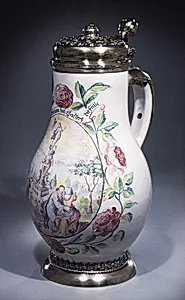
Jug (Krug)
late 17th century
Medium
Faience (tin-glazed earthenware); silver-gilt
Dimensions
Height: 9 7/8 in. (25.1 cm)
Classification
Ceramics-Pottery
Culture
German, Hanau with Nuremberg
Department
European Sculpture and Decorative Arts
Museum
Metropolitan Museum of Art, New York, NY
Credit
Gift of R. Thornton Wilson, in memory of Florence Ellsworth Wilson, 1950
Accession Number
50.211.195
Rights
Public Domain
Tags
Art Historical Context
This elegant *Jug (Krug)*, crafted by Abraham Helmhack late 17th-century Germany, exemplifies the vibrant faience tradition of Hanau with influences from nearby Nuremberg. Standing at just under 10 inches tall, it combines tin-glazed earthenware durable, colorfast medium popular across Europe as an affordable alternative to imported Chinese porcelain—with ornate silver-gilt accents, likely on the lid or handle, adding a touch of opulence. Hanau emerged as a key center for German faience production during Baroque era, where artisans like Helmhack mastered tin-glazing techniques to create glossy, vividly painted surfaces. The jug's decoration, featuring human figures amid blooming flowers, reflects the period's delight in lively, narrative motifs drawn from nature and daily life, blending functionality with artistic flair for tableware used in affluent households. Today, this piece in the Metropolitan Museum of Art's European Sculpture and Decorative Arts collection highlights the technical ingenuity and cultural exchange of 17th-century German ceramics, a testament to Helmhack's skill in bridging pottery and precious metals.