
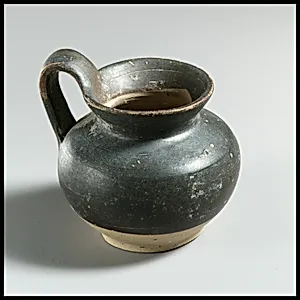
Jug, miniature
Unknown Artist
4th century BCE
Medium
Terracotta
Dimensions
H. 6.71 cm.
Classification
Vases
Culture & Period
Italic-Native, South Italian (Tarentine) · Late Classical
Department
Greek and Roman Art
Museum
Metropolitan Museum of Art, New York, NY
Credit
Rogers Fund, 1966
Accession Number
66.11.11
Rights
Public Domain
Art Historical Context
This delicate miniature jug, crafted from terracotta in the 4th century BCE, stands just 6.71 cm tall, exemplifying the exquisite pottery traditions of South Italy's Tarentine region. Produced by an unknown Italic-Native artisan during the Late Classical period it belongs to the vibrant world of ancient Greek colonies in Magna Graecia, where Tarentum (modern Taranto) thrived as a cultural crossroads blending indigenous Italic customs with Hellenic influences. Terracotta vessels like this jug were ubiquitous in daily life, rituals, and funerary practices, often wheel-thrown and fired to a warm reddish hue. Its miniature scale suggests it may have served as a votive offering in sanctuaries or a grave good, highlighting the ancient penchant for small-scale artistry that packed big symbolic punch. South Italian potters were renowned for their technical finesse, producing functional yet aesthetically pleasing forms that reflected prosperity and piety. Acquired through the Rogers Fund in 1966, this jug now graces the Metropolitan Museum of Art's Greek and Roman Art department, offering visitors a tangible glimpse into the everyday elegance of pre-Roman Italy. Its survival underscores the enduring legacy of Tarentine craftsmanship in the broader tapestry of classical antiquity.