
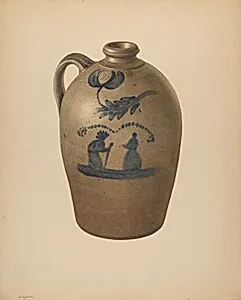
Jug
c. 1939
Medium
watercolor, graphite, and colored pencil on paperboard
Dimensions
overall: 45.8 x 37.1 cm (18 1/16 x 14 5/8 in.) Original IAD Object: 12 3/8" High
Classification
Index of American Design
Department
CG-W
Museum
National Gallery of Art, Washington, D.C.
Credit
Index of American Design
Accession Number
1943.8.7065
Rights
Public Domain
Art Historical Context
Behold the elegant *Jug*, a meticulously rendered study by Italian-American artist Giacinto Cap, created around 1939. This, graphite, and colored pencil work onboard (45.8 37.1 cm captures the form and subtle glazes of an everyday American ceramic vessel, originally standing 12 3/8 inches high. Part of the National Gallery of's collection, it exemplifies the precision of Capelli's draftsmanship, blending fluid washes of watercolor for depth and luminosity with the fine lines of graphite and colored pencil for intricate details. This artwork belongs to the *Index of American Design*, landmark WPA Federal Art Project from 1935–1942 that employed artists during the Great Depression to document the nation's folk art and crafts. Capelli's rendering preserves a slice of American material culture—likely a humble stoneware or slip-decorated jug—highlighting regional pottery traditions that reflected everyday life and ingenuity. These studies were not mere copies but vibrant celebrations of design heritage, ensuring that utilitarian objects gained artistic immortality. Through mixed media techniques, Capelli achieved a lifelike quality that invites viewers to appreciate the jug's craftsmanship, from its ergonomic handle to its earthy tones. Today, it reminds us how ordinary items embody cultural stories, bridging art history with the democratic spirit of American design.
About the Artist
Giacinto Capelli · 1855–present
**Giacinto Capelli** (American, active c. 1935–1942) contributed significantly to the documentation of American material culture through his precise watercolor renderings as part of the Index of American Design, a Federal Art Project under the Works Progress Administration (WPA). Little is known about his early life or formal training, which remains sparsely documented, though his expertise in wat...