
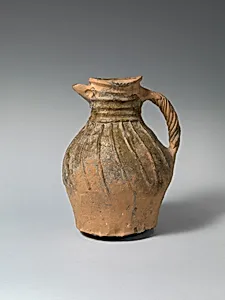
Jug with twisted handle
Unknown Artist
late 13th century
Medium
Lead glazed earthenware
Dimensions
10 11/16 × 8 1/8 × 7 3/8 in. (27.2 × 20.6 × 18.7 cm)
Classification
Ceramics-Pottery
Culture
British
Department
The Cloisters
Museum
Metropolitan Museum of Art, New York, NY
Credit
The Cloisters Collection, 2014
Accession Number
2014.582
Rights
Public Domain
Tags
Art Historical Context
This elegant "Jug with Twisted Handle," crafted in late 13th-century Britain, exemplifies everyday medieval pottery elevated to art through skilled craftsmanship. Made of lead-glazed earthenware—a practical medium that provided a glossy, waterproof finish for household use—the jug stands about 10½ inches tall, with a twisted handle that adds both ergonomic appeal and visual flair. Produced during a time when ceramic production was flourishing in England, such vessels were essential for serving ale, wine, or water in homes and taverns. The twisted handle technique highlights the potter's expertise, likely formed by hand on a wheel before firing and glazing with lead oxide for durability and shine. Lead glazing was a hallmark of medieval European ceramics, making pieces more resistant to daily wear while allowing subtle color variations from the clay and minerals beneath. Though unsigned by a known artist, this jug reflects British cultural life around 1280–1300, when trade and urbanization spurred functional yet decorative wares. Housed in The Cloisters at the Metropolitan Museum of Art, it offers a tangible glimpse into medieval domesticity, bridging the gap between utility and artistry in a pre-industrial age. Visitors can appreciate how such simple forms captured the ingenuity of anonymous makers.