
Jupiter and Ganymede
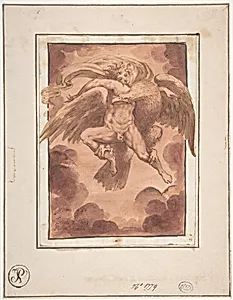
Medium
Pen and ink, red wash, heightened with white
Dimensions
7 1/4 x 5 3/4 in. (18.4 x 14.6 cm)
Classification
Drawings
Department
Drawings and Prints
Museum
Metropolitan Museum of Art, New York, NY
Credit
Purchase, Guy Wildenstein Gift, 2001
Accession Number
2001.435
Tags
About this artwork
This drawings titled "Jupiter and Ganymede" by Joseph Heintz the Younger dates to 1626. Executed in pen and ink, red wash, heightened with white, this work exemplifies the craftsmanship associated with Drawings and Prints. The piece demonstrates the technical skill and artistic vision characteristic of its period. The work's presence in a major museum collection attests to its significance in the broader narrative of art history. As part of institutional holdings, it serves both scholarly resear...
Art Historical Context
In the grand tradition of classical mythology revived during the Baroque era, Joseph Heintz the Younger's *Jupiter and Ganym* (1626) captures a pivotal moment from Ovid's *Metamorph*. Here, the king of the gods, Jupiter, transforms into a majestic eagle to abduct Trojan youth Ganymede, whisking him to Olympus as the gods' cupbearer. This drawing, measuring just 7¼ x 5¾ inches, reflects the era's fascination with dramatic narratives of divine desire and power, blending sensuality with celestial grandeur—a theme beloved by artists from Michelangelo to Rubens. Crafted in pen and ink with red was...