
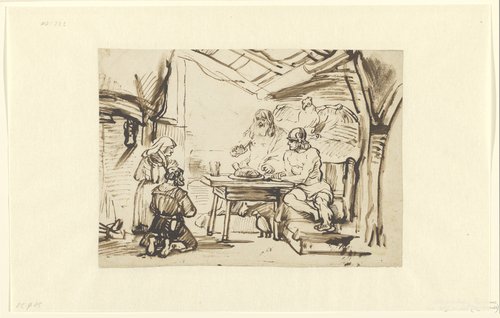
Jupiter en Mercurius bij Philemon en Baucis
Samuel van Hoogstraten, 1658 - 1663
About this artwork
In the intimate world of Dutch Golden Age drawings, Samuel van Hoogstr's *Jupiter en Mercuri bij Philemon enucis* (c. 1658–1663) captivates with its mythological narrative drawn from Ovid's *Metoses*. The scene portrays the gods Jupiter and Mercury, disguised as weary travelers, warmly welcomed by the humble elderly couple Philemon anducis in their modest. This tale of divine hospitality and reward underscores themes of generosity and piety, resonating in 17th-century Dutch culture amid a prosperous era of moral and artistic reflection. Hoogstraten, a versatile pupil of Rembrandt and a key figure in Leiden's art scene, crafted this work using pen and brown ink with brush accents ("pen en penseel in bruin"). At just 185 × 258 mm, the drawing exemplifies his technical prowess in fluid line work and subtle tonal washes, creating depth and texture on a small scale. Such preparatory sketches were prized for their spontaneity, blending Baroque drama with precise observation—a hallmark of Dutch draftsmanship. This piece highlights Hoogstraten's intellectual depth as an art theorist and traveler, influenced by Italian masters. It invites visitors to ponder how everyday virtue could earn heavenly favor, offering a window into the era's blend of classical antiquity and Northern realism.