
Ka La'Au
Unknown Artist
19th century
Medium
Wood (Kauila?)
Dimensions
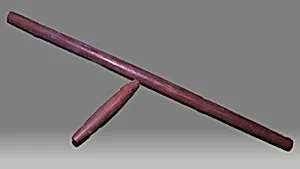
L. 83.1 cm (32-11/16 in.); Diam. at center: 3.7 cm (1-7/16 in.); Diam. at ends: 2.8 cm (1-1/16 in.)
Classification
Idiophone-Concussion
Culture
Hawaiian
Department
Musical Instruments
Museum
Metropolitan Museum of Art, New York, NY
Credit
The Crosby Brown Collection of Musical Instruments, 1889
Accession Number
89.4.739
Rights
Public Domain
Art Historical Context
Behold the *Ka La'Au*, a striking 19th-century Hawaiian musical instrument from the Metropolitan Museum Art's Crosby Brown Collection. Crafted from dense kauila wood—a rare, resonant hardwood native to Hawai'i—this idiophone-concussion device measures an elegant 83.1 cm in length, tapering from 3.7 cm at its center to 2.8 cm at the ends. smooth, cylindrical form exemplifies masterful woodworking, polished to a subtle sheen that highlights the wood's natural grain and durability. In traditional Hawaiian culture, the *ka la'au* (meaning "the wood") served as a rhythmic clapper, struck together in pairs by chanters during hula performances and sacred chants. This simple yet profound tool punctuated storytelling, invoking the voices of ancestors and the rhythms of the natural world. Dating to the 19th century, it reflects pre-colonial musical traditions amid growing Western influence, preserving indigenous ingenuity in sound production without membranes or strings. Today, this artifact invites us to listen beyond the visual: imagine its sharp, resonant cracks echoing through Polynesian gatherings, bridging past and present in the Met's renowned collection of global instruments. A testament to Hawaiian craftsmanship and spiritual expression.