
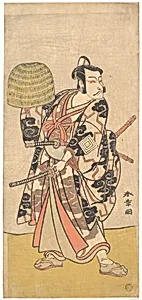
勝川春章画 五代目市川團十郎|Kabuki Actor Ichikawa Danjūrō V
Medium
Woodblock print (nishiki-e); ink and color on paper
Dimensions
H. 12 3/4 in. (32.4 cm); W. 5 7/8 in. (14.9 cm)
Classification
Prints
Culture & Period
Japan · Edo period (1615–1868)
Department
Asian Art
Museum
Metropolitan Museum of Art, New York, NY
Credit
Rogers Fund, 1922
Accession Number
JP1358
Rights
Public Domain
Tags
Art Historical Context
This woodblock print by Katsukawa Shunshō captures the renowned kabuki actor Ichikawa Danjūrō V in a dramatic role from 1774. Created during Japan’s Edo period, the image belongs to the vibrant tradition of yakusha-e, or actor prints, which celebrated the stars of the kabuki stage. Shunshō, a leading figure in the Katsukawa school, specialized in these lively portraits that conveyed both the actor’s likeness and the intensity of performance. The medium, nishiki-e or “brocade picture,” was a full-color woodblock technique that allowed for rich inks and fine detail on paper. Such prints were affordable souvenirs for theatergoers, helping to spread the fame of actors like Danjūrō V across Edo society. The actor’s poised stance and sword hint at the heroic or martial roles for which his lineage was famous. Today, this work in the Metropolitan Museum of Art’s collection offers a vivid glimpse into the cultural excitement of Edo-period theater and the artistry that made ukiyo-e prints beloved worldwide.
About the Artist
Katsukawa Shunshō 勝川春章 (Japanese) · 1726 –1792
Japanese, 1726–1792