
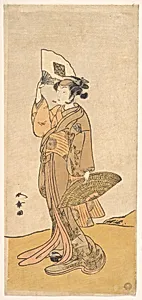
初代中村松江|Kabuki Actor Nakamura Matsue
ca. 1772
Medium
Woodblock print (nishiki-e); ink and color on paper
Dimensions
12 3/4 x 5 13/16 in. (32.4 x 14.8 cm)
Classification
Prints
Culture & Period
Japan · Edo period (1615–1868)
Department
Asian Art
Museum
Metropolitan Museum of Art, New York, NY
Credit
Purchase, Joseph Pulitzer Bequest, 1918
Accession Number
JP403
Rights
Public Domain
Tags
Art Historical Context
Step into the vibrant world of-period Japan with Katsukawa Shunshō'sKabuki Actor Nakamura Matsue* (ca. 1772), a stunning nishiki-e woodblock print the Metropolitan Museum of Art Shunshō, a master the ukiyo-e—literally "pictures of the floating world"—ized in yakusha-e, or actor portraits, capturing the charisma of kabuki stars. This intimate half-length depiction of Nakamura Matsue I a celebrated onnagata (specialist in female roles), showcases her poised elegance, likely in a theatrical pose that would have thrilled 18th-century audiences. The medium is a triumph of innovation: nishiki-e, or "brocade prints," employed multiple woodblocks for layered inks and pigments, yielding the rich, jewel-toned colors unseen before the 1760s. Measuring just 12¾ x 5⅞ inches, this print's narrow format hints at its use on fans (ōgi-e), portable treasures for fans of kabuki to carry theater glamour into daily life. During the Edo period (1615–1868), such prints democratized celebrity culture, fueling a booming market for affordable art amid Japan's urban boom. Acquired through the Joseph Pulitzer Bequest in 1918, this piece exemplifies Shunshō's influence on the Katsukawa school and the golden age of actor imagery, blending technical prowess with cultural reverence for performance. A window into Japan's playful, theatrical soul!
About the Artist
Katsukawa Shunshō 勝川春章 (Japanese) · 1726 –1792
Japanese, 1726–1792