
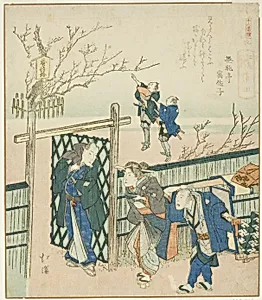
Kamata, from the series "A Record of a Journey to Enoshima, a Set of Sixteen (Enoshima kiko, jurokuban tsuzuki)"
1833
Medium
Color woodblock print; shikishiban, surimono
Dimensions
20.8 × 18.9 cm (8 1/4 × 7 1/2 in.)
Classification
woodblock print
Department
Arts of Asia
Museum
Art Institute of Chicago
Accession Number
80992
Rights
Public Domain
Art Historical Context
Totoya Hokkei's *Kamata*, from the *A Record of a to Enoshima, a Set of Sixteen (Enoshima kiko, jurokuban tsuki)*, invites visitors into the vibrant world of 19-century Japan. Created in 1833 during the Edo period, this color woodblock print depicts a scenic stop along the popular pilgrimage route to Enoshima, a revered island shrine near Kamakura. Hokkei a skilled ukiyo-e artist pupil of the master Katsushika Hokus, chronicled the journey in 16 panels, blending everyday travel sights with poetic beauty to evoke the wanderlust of the era. As a *surimono*—a deluxe, privately commissioned print often produced for New Year's greetings or poetry gatherings—this work stands out in the shikishiban format (roughly 8¼ × 7½ inches), ideal for framing short verses on luxurious paper. The woodblock technique allowed for rich, layered colors, subtle gradients, and sometimes embossed effects, showcasing the pinnacle of Japanese printmaking craftsmanship amid strict censorship and guild regulations. Housed in the Art Institute of Chicago's Arts of Asia collection, *Kamata* highlights the cultural allure of *kaido* travel diaries, where artists romanticized roads, rivers, and roadside life. It reminds us how ukiyo-e captured fleeting pleasures, bridging art and everyday devotion in a time of growing literacy and leisure.
About the Artist
Totoya Hokkei · 1780–1850
Totoya Hokkei (魚屋 北渓, 1780–1850), born Iwakubo Tatsuyuki in Edo (modern Tokyo), began his life as a humble fishmonger in the Yotsuya Samegahashi district, a trade reflected in his art name "Totoya," meaning fish shop. He transitioned to art through rigorous training, first studying under Kanō Yōsen'in Korenobu, head of the Kobikichō branch of the prestigious Kanō school, where he honed landscape p...