
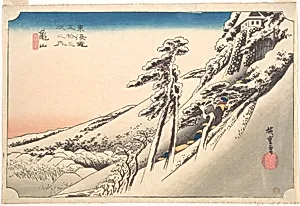
東海道五十三次之内 亀山 雪晴|Kameyama, Yuki Hare
ca. 1834
Medium
Woodblock print; ink and color on paper
Dimensions
9 15/32 x 14 in. (24.1 x 35.6 cm)
Classification
Prints
Culture & Period
Japan · Edo period (1615–1868)
Department
Asian Art
Museum
Metropolitan Museum of Art, New York, NY
Credit
Rogers Fund, 1918
Accession Number
JP517
Rights
Public Domain
Tags
Art Historical Context
In the renowned series *The Fifty-three Stations of theōkaidō*, Utagawa Hiroshige the poetic beauty of Japan's historic coastal road from Edo (modern Tokyo) to Kyoto This 1834 woodblock print *Kameyama, Yuki Hare* ("Kameyama, Clearing Snow"), depicts the 45th station at Kameyama during a serene winter moment when snow begins to melt under clearing skies. Hiroshige, a leading figure in the ukiyo-e ("pictures of the floating world") movement of Japan's Edo period (1615–1868), masterfully evokes the transient atmosphere of nature, with snow-dusted trees and distant mountains bathed in soft light. Printed with vibrant inks and colors on paper—a technique known as *nishiki-e* or "brocade pictures"—the work showcases the collaborative artistry of woodblock printing, involving carvers, printers, and publishers. Measuring just 9½ by 14 inches, its intimate scale made it affordable for everyday viewers, fueling a craze for landscape prints amid restricted travel under the shogunate. Hiroshige's innovative use of perspective and subtle gradations of color heightened the emotional impact, influencing later artists like Vincent van Gogh. This Met print, acquired via the Rogers Fund in 1918, invites us to savor Japan's winter hush—a timeless reminder of beauty in impermanence.
About the Artist
Utagawa Hiroshige · 1826–1869
Utagawa Hiroshige (1797–1858), born Andō Tokutarō, was the last great master of Japanese ukiyo-e woodblock printmaking and one of the most influential landscape artists in history. Born in Edo (modern Tokyo) into a low-ranking samurai family serving as fire wardens, Hiroshige transformed landscape printmaking into a poetic meditation on nature, weather, and everyday life. His revolutionary approac...