
Kan
1777 - 1790
Medium
painting technique
Dimensions
21.3; 16; 12.6; 9.4
Rights
Public Domain
About this artwork
height 21.3 cm x width 16 cm x depth 12.6 cm
Art Historical Context
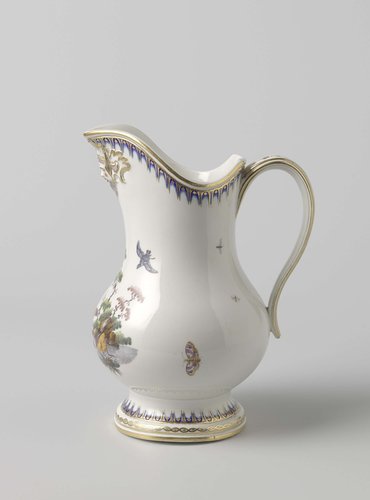
**Kan (Jug)** *Porseleinfabriek Den Haag 1777–1790* *Painted porcelain, h. 21.3 × w. 16 × d. 12.6 cm* This delicate porcelain jug, known as a *kan* in Dutch, hails from the Porseleinfabriek Den, a short-lived but innovative factory in The Hague, Netherlands. Active during the late 18th century, factory specialized in high-quality porcelain objects that captured the elegance of the Rococo era, often featuring intricate painted decorations. Produced between 1777 and 1790, this piece exemplifies the European porcelain boom, where factories vied to rival Chinese imports with their own sophisticated tableware and decorative items. The medium highlights a "painting technique," likely referring to overglaze enamel painting, a labor-intensive process where colors were applied to fired porcelain and refired at lower temperatures for vibrant, durable finishes. At just 21.3 cm tall, this compact jug—complete with a depth accommodating a handle—would have graced affluent Dutch households, serving wine, water, or spirits during social gatherings. Its modest dimensions belie its craftsmanship, blending functionality with artistry. Culturally, such pieces from Den Haag reflect the Netherlands' rich ceramic tradition, bridging Delftware's tin-glazed legacy with true hard-paste porcelain. Though the factory closed amid economic shifts, surviving *kans* like this offer a window into Enlightenment-era luxury and the global exchange of design influences. A charming survivor of 18th-century refinement! (198 words)