
Kanagawa oki namiura
1829 - 1833
Medium
nishiki-e
Dimensions
254; 375
Rights
Public Domain
About this artwork
height 254 mm x width 375 mm
Art Historical Context
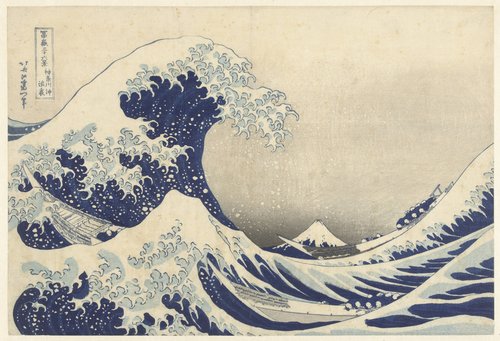
Katsushika Hokusai's *Kanagawa-oki nami ura* (Under the Wave off Kanagawa), between 1829 and 1833, is the iconic masterpiece from his groundbreaking series *Thirty-six Views Mount Fuji*. This nishiki-e—a vibrant, full-color woodblock print—captures towering wave curling dramatically over three fishing boats, with the distant of Mount Fuji providing a counterpoint. Measuring just 254 mm high by 375 mm wide, its compact size belies its monumental impact, making it accessible to everyday Edo-period viewers through affordable prints. Hokusai, a virtuoso of the ukiyo-e ("pictures of the floating world") movement, revolutionized landscape art with this work. The nishiki-e technique involved carving multiple wooden blocks for precise layering of colors, including the vivid Prussian blue waves that evoke nature's raw power. Produced during Japan's isolationist era, it reflects a fascination with the sublime forces of sea and mountain, blending realism with expressive drama. This print's cultural legacy endures: it sparked global Japonisme in the 19th century, influencing Impressionists like Monet and Van Gogh, and remains one of the most reproduced images in history—a timeless emblem of Japanese artistry and resilience.
About the Artist
Katsushika Hokusai · 1760–1849
Katsushika Hokusai (1760-1849) stands as one of history's most influential artists, a Japanese master who revolutionized the ukiyo-e woodblock print tradition and profoundly shaped Western art. Born in the Katsushika district of Edo (modern-day Tokyo) to an artisan family, Hokusai lived through nearly nine decades of extraordinary creative evolution, adopting over thirty different artistic names t...