
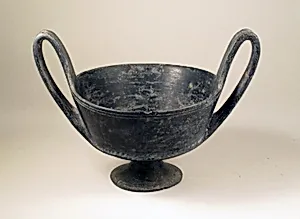
Kantharos
Unknown Artist
650–625 BCE
Medium
Terracotta
Dimensions
5 15/16 × 6 in. (15.1 × 15.2 cm) Diam. of foot: 2 7/8 in. (7.3 cm)
Classification
Vases
Culture & Period
Etruscan · Archaic
Department
Greek and Roman Art
Museum
Metropolitan Museum of Art, New York, NY
Credit
Purchase, 1896
Accession Number
96.9.160
Rights
Public Domain
Art Historical Context
Step into the vibrant world of ancient Etruria with this exquisite terracotta kantharos, a drinking cup from the Archaic period (650–625 BCE). Crafted by an unknown artist, this modest yet elegant vessel measures just under 6 inches tall and wide, with a sturdy foot 2⅞ inches across. Etruscans, the sophisticated civilization that thrived in central Italy before Roman dominance, were masterful potters who drew inspiration from Greek prototypes. The kantharos form—characterized by its deep bowl and tall, curving handles rising above the rim—was a staple at symposia, elite banquets where wine flowed freely and ideas were shared. This piece exemplifies Etruscan terracotta techniques: wheel-thrown clay fired to a warm reddish hue, showcasing their skill in producing functional yet refined tableware. During the Archaic era, Etruscans actively traded with Greek colonists in southern Italy, adopting and adapting vessel shapes like this one, which symbolized luxury and ritual feasting. Though undecorated, its balanced proportions highlight the period's shift toward more dynamic forms influenced by Eastern motifs. Acquired by the Metropolitan Museum of Art in 1896, this kantharos offers a tangible link to Etruscan daily life and cultural exchange, reminding us how ancient artisans turned clay into vessels of joy and communion.