
Karel II
1671
Medium
striking (metalworking)
Dimensions
4.4; 34.33
Rights
Public Domain
About this artwork
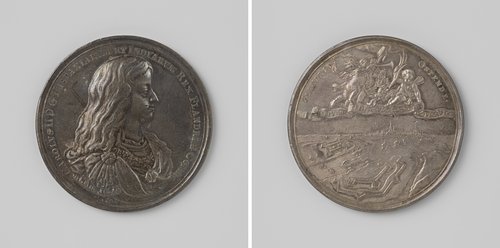
Zilveren penning. Voorzijde: borststuk jongeman binnen omschrift. Keerzijde: Oostende met sluizen en versterkingen, daarboven putti en wimpel met opschrift
Art Historical Context
**Karel II** is a finely crafted silver medal struck in 1671 by Jean Roëttiers, a Baroque medallist and engraver who served as chief engraver at the Royal Mint under Charles II Measuring just 4.4 cm diameter and weighing 34.33 grams, this intimate yet detailed piece exemplifies the high artistry of 17th-century numismatic metalworking. Roëttiers' striking technique—using engraved dies to impress intricate designs onto silver planchets—allowed for sharp, three-dimensional reliefs that captured both portraiture and symbolic scenes with remarkable precision. The obverse features a youthful bust of a man, likely Charles II (Karel II in Dutch), framed by an inscription, evoking the grandeur of royal portrait medals popular in European courts. On the reverse, the port city of Ostend appears with its sluices and fortifications, overlooked by playful putti (cherubs) holding a banner with text. This imagery suggests a commemorative purpose, possibly celebrating a naval or military event tied to the city's strategic defenses during the turbulent Anglo-Dutch conflicts of the era. Such medals held cultural weight as portable propaganda and diplomatic gifts, blending artistry with historical narrative. Roëttiers' work reflects the opulent Baroque style, where classical motifs like putti added allegorical depth, making **Karel II** a window into the era's political ambitions and technical mastery.