
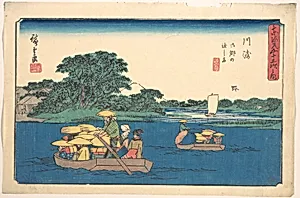
東海道五十三次之内 川崎 六郷の渡し舟|Kawasaki
ca. 1842
Medium
Woodblock print; ink and color on paper
Dimensions
Overall: 9 x 13 3/4in. (22.9 x 34.9cm)
Classification
Prints
Culture & Period
Japan · Edo period (1615–1868)
Department
Asian Art
Museum
Metropolitan Museum of Art, New York, NY
Credit
Purchase, Joseph Pulitzer Bequest, 1918
Accession Number
JP570
Rights
Public Domain
Tags
Art Historical Context
Utagawa Hiroshige's *Kawasaki* (ca. 1842) is a captivating woodblock print from his renowned series *The Fifty-three Stations of the Tōkaidō*. This iconic Edo-period (1615–8) work depicts the second station along the historic Tōkaidō road, the vital coastal route connecting Edo (modern Tokyo) and Kyoto. Travelers relied on ferries like those at Rokugō no Watashi to cross the Tama River, a bustling scene of everyday Japanese life that Hiroshige masterfully captured. As a leader of the ukiyo-e ("pictures of the floating world") movement, Hiroshige excelled in woodblock printing, layering ink and vibrant colors on paper to evoke mood and movement. Here, the composition highlights ferries navigating a wide river, dotted with human figures—porters, pilgrims, and passengers—under expansive skies. His innovative use of perspective and subtle gradations of color brings a sense of depth and transience, hallmarks of his poetic landscapes. This print, now in the Metropolitan Museum of Art, reflects the era's fascination with travel and nature amid Japan's isolationist policies. Hiroshige's series, produced in large editions, democratized art for the masses and later inspired Western artists like Van Gogh, bridging Eastern and global aesthetics. A window into 19th-century Japan, it invites viewers to ponder the rhythm of rivers and journeys.
About the Artist
Utagawa Hiroshige · 1826–1869
Utagawa Hiroshige (1797–1858), born Andō Tokutarō, was the last great master of Japanese ukiyo-e woodblock printmaking and one of the most influential landscape artists in history. Born in Edo (modern Tokyo) into a low-ranking samurai family serving as fire wardens, Hiroshige transformed landscape printmaking into a poetic meditation on nature, weather, and everyday life. His revolutionary approac...