
Kelkvelum
Unknown Artist
c. 1750 - c. 1800
Medium
embroidering
Dimensions
61.5; 63.5
Rights
Public Domain
About this artwork
On loan from the Stichting Twickel
Art Historical Context
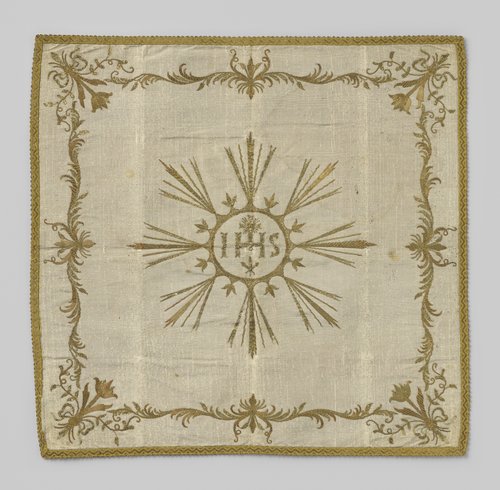
Welcome to the captivating world of 18th-century ecclesiastical textiles with *Kelkvelum*, a finely crafted chalice veil from around 1750–1800. This anonymous artwork, measuring approximately 61.5 cm high by 63.5 cm wide, exemplifies the artistry of embroidery—a labor-intensive technique where threads are meticulously stitched into fabric to create intricate patterns and motifs. Chalice veils, or *kelkvela* in Dutch, were essential liturgical items in Catholic churches, used to cover the chalice during Mass, symbolizing reverence and protection of the sacred vessels. Created during the late Baroque to early Rococo period in the Netherlands—likely linked to the Twente region, given its loan from Stichting Twickel—this piece highlights the era's devotion to opulent religious decoration. Embroidery flourished in Dutch convents and homes, blending technical skill with spiritual expression; silk threads on velvet or linen bases often featured floral, symbolic, or heraldic designs, though specifics here remain a tantalizing mystery. Its survival speaks to the enduring cultural importance of such artifacts, bridging artistry and faith in a time of religious fervor amid Enlightenment shifts. On view through the generosity of Stichting Twickel, *Kelkvelum* invites you to appreciate the anonymous hands that wove beauty into devotion, reminding us of embroidery's timeless role in preserving heritage.