
Kenji Morita
1886
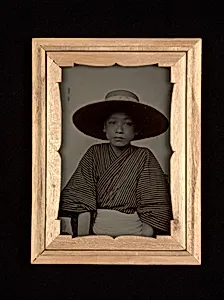
Medium
Ambrotype
Dimensions
Image: 9.6 x 6.8 cm (3 3/4 x 2 11/16 in.) Case: 1.3 x 11.1 x 8.3 cm (1/2 x 4 3/8 x 3 1/4 in.)
Classification
Photographs
Department
Photographs
Museum
Metropolitan Museum of Art, New York, NY
Credit
Funds from various donors, 2004
Accession Number
2004.282a, b
Rights
Public Domain
Tags
Art Historical Context
In the late 19th century, Japan's Meiji era of rapid modernization, photography emerged as a powerful tool for portraiture, bridging traditional aesthetics with Western technology. This ambrotype, titled *Kenji Morita* and created by the photographer Fujita in 1886, captures the solemn gaze of a young boy, likely from a prominent family. Measuring a compact 9.6 x 6.8 cm, the image is housed in a protective case, evoking the intimate, treasured keepsakes of the time. Ambrotypes, produced via the wet collodion process on glass, were prized for their rich tonal depth and one-of-a-kind nature—no duplicates possible—making each a unique artifact. By 1886, this technique was somewhat outdated in the West, where gelatin dry plates dominated, but it persisted in Japan for its affordability and painterly quality, often mimicking ukiyo-e woodblock portraits. Fujita's sensitive composition highlights the boy's direct stare and traditional attire, reflecting cultural values of filial piety and youthful promise. Acquired by The Metropolitan Museum of Art through donor funds in 2004, this poignant portrait offers a window into everyday Meiji life, where photography documented personal milestones amid societal transformation. A charming reminder of technology's human touch.