
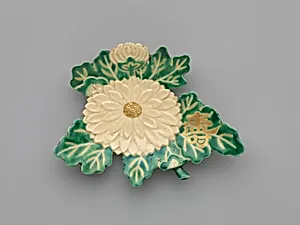
乾山様式 菊形皿|Kenzan-style Dish in the Shape of Chrysanthemum
Unknown Artist
early 19th century
Medium
Stoneware with overglaze enamels (Kyoto ware)
Dimensions
W. 3 1/4 in. (8.3 cm); L. 18 in. (45.7 cm)
Classification
Ceramics
Culture & Period
Japan · Edo period (1615–1868)
Department
Asian Art
Museum
Metropolitan Museum of Art, New York, NY
Credit
Gift of Mrs. V. Everit Macy, 1923
Accession Number
23.225.18
Rights
Public Domain
Tags
Art Historical Context
This exquisite Kenzan-style dish shaped like a blooming chrysanthemum, exemplifies the refined artistry of early 19th-century Kyoto ware during Japan's Edo period (1615–1868). Craft from stoneware and adorned with vibrant overglaze enamels, it measures an impressive 18 inches long just over 3 inches wide, the flower's layered petals. Though the artist remains unknown, the piece draws from the influential style of Ogata Kan (1663–1743), a master potter celebrated for his poetic, asymmetrical designs inspired by nature, ceramics, and literati painting. Kyoto ware, produced in Japan's cultural heartland, was prized for its technical innovation: overglaze enamels allowed for bold colors like greens and golds—evident in the leaf motifs here—that were fired at lower temperatures to preserve delicate hues. The chrysanthemum form held deep cultural resonance as the imperial flower, symbolizing autumn, longevity, and the emperor's authority, often featured in tea ceremony wares or as decorative objects for elite homes. A gift to the Metropolitan Museum of Art from Mrs. V. Everit Macy in 1923, this dish invites visitors to appreciate Edo Japan's blend of functionality and whimsy, where everyday ceramics became canvases for seasonal beauty.